Isla Negra from Santiago: Neruda’s Favorite House, First-Come and Closed Mondays, and Graves Above the Pacific
Ninety minutes from Santiago, Neruda’s favorite of his three houses rides its dark rocks like a ship — figureheads, bottles, shells, and his and Matilde’s graves in the garden. No reservations: first-come, closed Mondays.
The short version
- The run is about ninety minutes by car on Ruta 78 or by frequent coastal buses from Santiago’s terminals — with the alarm’s arrival math governing: the house sells no advance tickets, admits first-come, and closes Mondays (fundacionneruda.org).
- The name honesty per the alarm: Isla Negra is a coastal village, not an island — Neruda’s own renaming after the black rocks offshore stuck to the whole place, which suited a poet who renamed most things he loved.
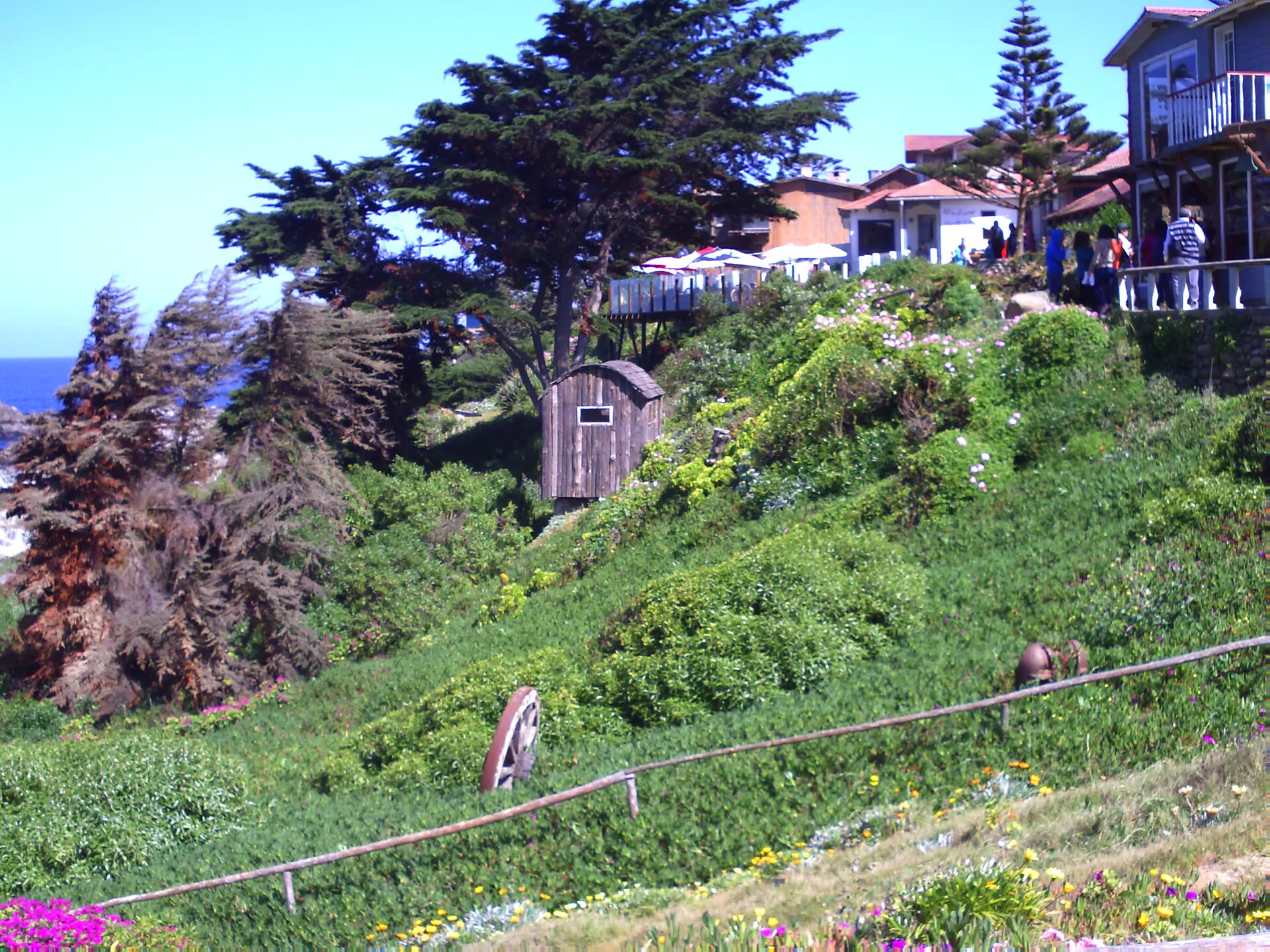
- The house is the alarm’s ship: built and rebuilt by Neruda from 1939 onward as his favorite of the three (Santiago’s La Chascona and Valparaíso’s La Sebastiana documented on this network’s Valparaíso page), its low stone-and-timber rooms deliberately shaped like a vessel riding the rocks — narrow passages, portholes, the Pacific filling every window.
- The collections are the poet’s hoard: ships’ figureheads crowding the ceilings, bottles in colored ranks, shells by the thousand, ships in bottles, masks, and the writing desk the sea delivered as driftwood — the audio guide per the alarm threading Neruda’s own stories through it all.
- The graves per the alarm sit in the garden: Neruda and Matilde Urrutia lie buried on the prow-point facing the ocean, reinterred here in 1992 as he had asked — the visit’s quiet final station, taken at its own register.
- The pairings per the alarm complete the day: seafood lunch in El Quisco or Punta de Tralca along the same coast, and Pomaire — the clay-pottery village just off Ruta 78 — for the return stop, its greda cookware and the famous half-kilo pastel de choclo serving as the day’s second act.

Getting there
The first-come rule per the alarm is the entire plan: arrive at opening or shortly after, especially in summer and on weekends, when afternoon queues can exceed the day’s remaining capacity. Buses drop in the village a short walk from the gate; drivers park along the coastal road. The Monday closure is absolute. The house tours at its own pace with the audio guide; the coastal path below is free and frames the ship from sea level.
The day
The house repays the early arrival with rooms at human density: the bar Neruda tended in a captain’s costume, the figurehead gallery’s wooden women leaning from the beams, the shell room’s spiral logic, the bells, the ships in bottles, and the desk of hauled-in driftwood facing the surf that delivered it — the audio guide’s anecdotes per the alarm converting inventory into biography. The garden takes the last station: the graves on the point, the Pacific doing what it does, and the locomotive engine in the flowers (he loved them; no further justification recorded). The coastal walk below reframes the whole vessel against its rocks. Lunch runs the alarm’s fork — El Quisco’s caletas for machas a la parmesana and the day’s catch — and the return road offers Pomaire: clay stalls, greda kitchens, and the pastel de choclo sized per the alarm’s judgment clause. Santiago receives you back by early evening.
When to go
Year-round — the house is the constant, and winter’s wilder surf arguably improves the windows. Summer (January–February) adds Chile’s own beach season to the coast: the first-come queue math hardens, and the early arrival per the alarm becomes law rather than advice. Spring and fall run the coast at its clearest and the house at its calmest. Mondays are closed in every season, and the fundación’s pages carry the current hours — the one check before any drive.
Frequently Asked Questions
Why was this his favorite house?
By his own account, the sea: Isla Negra was where Neruda wrote much of his later work, assembled his collections, and asked to be buried — the house grew room by room around the objects and the view for over three decades. La Chascona was the city house, La Sebastiana the party house; Isla Negra was the vocation.
What’s the story with the graves?
Neruda died days after the 1973 coup and was buried in Santiago under a dictatorship that ransacked his houses; his wish — burial at Isla Negra facing the sea — waited until democracy. In 1992 he and Matilde were reinterred on the garden point with state honors. The site is treated as the visit’s quiet conclusion, per the alarm’s register.
Is the audio guide really worth it?
Per the alarm, the rare yes: it’s built from Neruda’s own writings and the fundación’s anecdotes, keyed room by room — the difference between seeing a hoard and hearing the collector. It’s included or near-free with entry and runs in multiple languages. Take it even if you never take them.
What is pastel de choclo?
Chile’s sweet-corn casserole — ground corn baked over a pino of beef, chicken, olives, and egg, served volcanic in a clay dish — and Pomaire’s greda-oven versions are the famous outsized ones per the alarm’s size-of-your-judgment clause. The village’s pottery is the other half of the stop: the cookware that makes the dish is the souvenir that keeps making it.
Isla Negra or Valparaíso from Santiago?
Both documented on this network, and they’re the Neruda axis: Valparaíso for La Sebastiana, the hills, and the port city’s full day; Isla Negra for the pilgrimage proper at gentler pace. City energy versus coastal elegy — completists do both and file La Chascona for a Santiago morning, which the fundación’s shared logistics make easy.