Valparaíso from Santiago: The Every-Few-Minutes Bus, the Ascensores, and the Hills Worth Climbing
A port city that pinned its neighborhoods to forty-five hills and connected them with century-old funiculars. The bus from Santiago costs little and leaves before you finish deciding.
The short version
- Buses run Santiago to Valparaíso every few minutes from Pajaritos metro station (faster to board than the downtown terminal), taking about 100 minutes on the highway — no booking, tiny fares, constant departures.
- The ascensores are the city’s signature: creaking funicular boxes from the 1880s–1900s hauling passengers up the hillsides for small change. A handful operate at any given time; Concepción, El Peral, and Reina Victoria serve the classic hills.
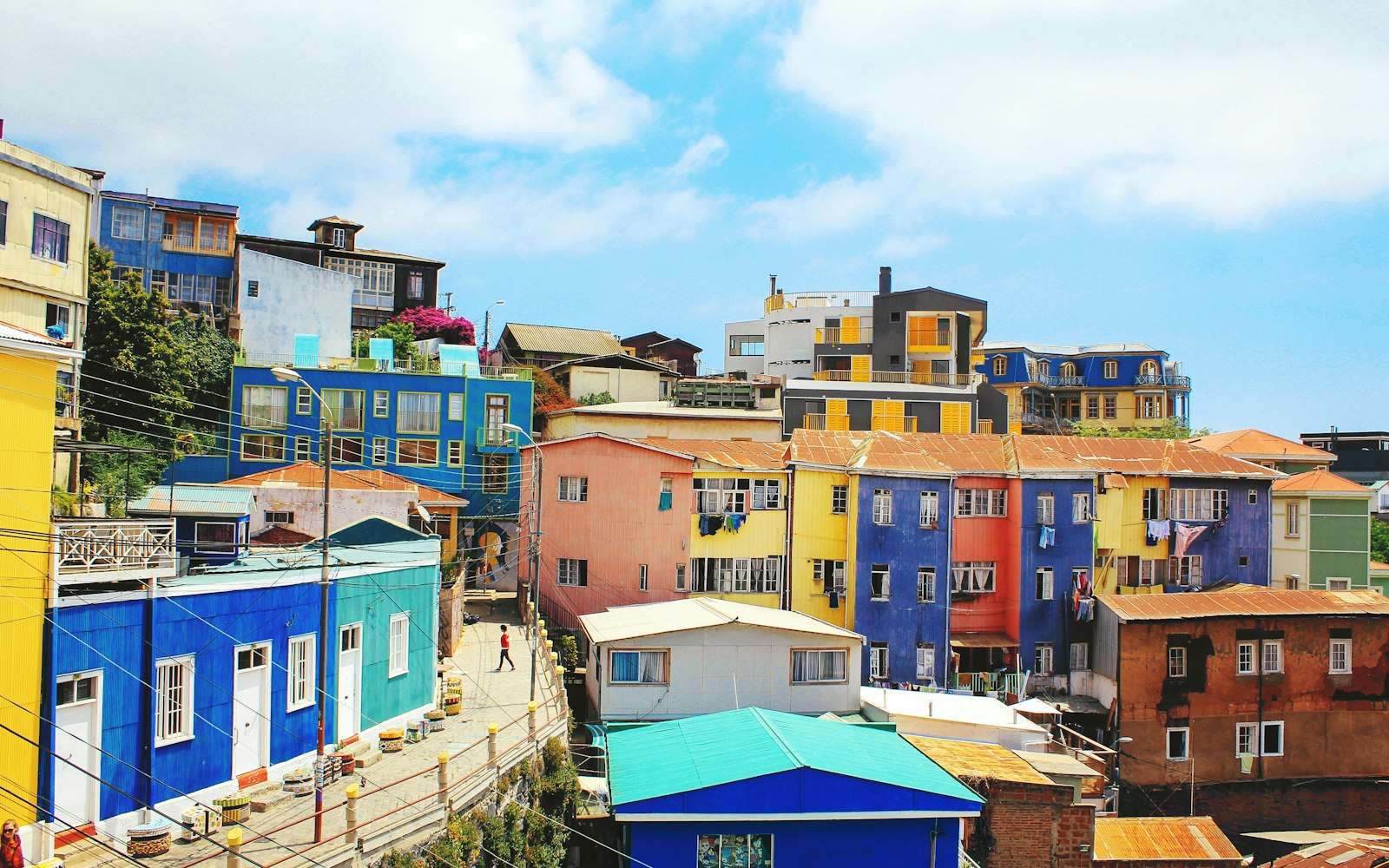
- Cerros Alegre and Concepción hold the concentrated version of the city’s fame: staircase murals, corrugated-iron mansions in fishing-boat colors, and cafés wedged into the views.
- La Sebastiana, Pablo Neruda’s five-story house on Cerro Bellavista, is the best of his three museum-homes — a ship’s cabin pretending to be architecture; details at fundacionneruda.org.
- The port’s flat blocks — the market, Plaza Sotomayor, the working docks — are the historical city and the reason UNESCO listed it; they are also where the alarm’s pocket rules apply hardest.
- Street art here is civic policy, not vandalism: whole staircases are commissioned canvases, and the open-air museum on Cerro Bellavista formalized it decades ago.

Getting there
The Pajaritos trick is the local knowledge worth having: ride Santiago’s metro Line 1 to Pajaritos and board there rather than fighting the downtown terminal — same buses, shorter lines, and you’re on the highway in minutes. Services run to Valparaíso’s terminal near the Congress; from there, trolleybus or a flat 20-minute walk reaches Plaza Sotomayor and the ascensor bases. The return needs no plan either — buses leave until late evening at the same relentless frequency.
The day
Start flat: Plaza Sotomayor’s naval monument, the port’s working edge, a seafood empanada at the Mercado. Then the method from the alarm — ascensor up Cerro Concepción, wander the Alegre–Concepción loop of murals, lookouts, and painted stairways, descend on foot, repeat on the next hill. Lunch on a terrace with the harbor below; the hills price gently for the views they deal. Mid-afternoon, taxi or the long walk to La Sebastiana for Neruda’s harbor-gazing armchair and general maximalism, then a final ascensor ride as the light goes gold on the corrugated iron. The evening bus home requires nothing but showing up.
When to go
October through April is the Pacific-light season — clear, dry, and made for the hills. Summer weekends bring santiaguinos to the coast en masse; midweek keeps the staircases workable. Winter is grayer and quieter with genuinely fine days scattered through it — the city photographs differently under drama. The New Year’s fireworks over the bay are Chile’s biggest party and an overnight commitment, not a day trip. Viña del Mar next door adds beaches to any visit, at the cost of Valparaíso hours.
Frequently Asked Questions
Is Valparaíso safe for a day visitor?
With daylight, the tourist hills, and the front-pocket rules: yes, and thousands do it daily. The flat port blocks after dark and flashed valuables change the odds — this is a working port city, not a resort, and it repays the same street sense as any of them.
Which hills matter most?
Alegre and Concepción for the concentrated classic; Bellavista for Neruda and the open-air museum. Beyond those, wander by appetite — the city’s texture is the attraction, not a checklist.
Are the ascensores safe and running?
The operating ones are inspected, municipal or supervised, and part of daily life — ride without drama. Which ones run varies year to year; the bases make it obvious.
Should I add Viña del Mar?
The metro connects the two cities in minutes, so beach-and-hills days exist. But Viña is a conventional resort; Valparaíso is the singular thing. First visit, spend it all here.
Is La Sebastiana worth the detour?
For Neruda’s house-as-autobiography and the best interior view in the city, yes — it’s the right single museum for the day. Book online in high season; the rooms are small.