An Afternoon in Viña del Mar
The Garden City’s flower clock, castle-lined shore, and long Pacific beaches — Valparaíso’s tidy sibling, ninety minutes from Santiago.
The short version
- Buses leave Santiago’s Pajaritos and Alameda terminals for Viña every few minutes — about an hour and a half to two hours over the coastal range — no booking needed outside summer weekends; city info at viña tourism.
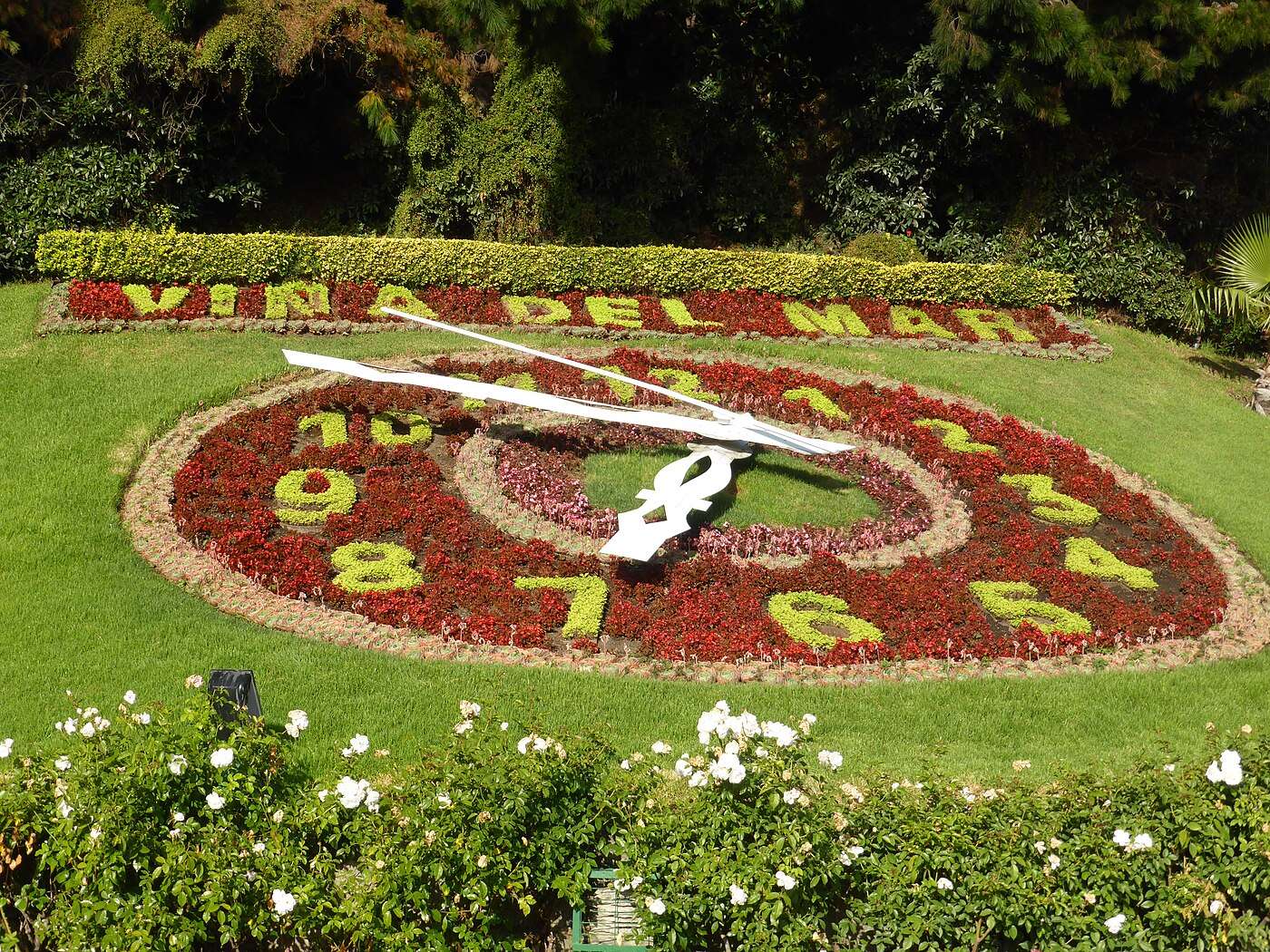
- The Reloj de Flores — the working flower clock planted in 1962 for the World Cup and replanted ever since — anchors the city’s Garden City branding at the Caleta Abarca corner, photographed by every arriving bus since.
- Castillo Wulff hangs over the surf line on its own rocks — a 1906 merchant’s folly with a glass-floored gallery above the waves, free to enter when exhibitions run — and the castle-dotted shoreline walk past it is the city’s best half hour.
- Quinta Vergara holds the amphitheatre of the famous February song festival and the Palacio Vergara’s art museum inside a hill-backed garden — the quiet green counterweight to the beach blocks.
- The beaches run north in a long golden strip — Acapulco, El Sol, Las Salinas — with the Humboldt Current keeping the water honest: Chileans swim anyway, visitors wade thoughtfully and tan successfully.

Getting there
Frequent buses run from Pajaritos (fastest boarding) and the Alameda terminal — roughly 90 minutes to Viña’s terminal, a short walk or cab from the clock and the shore. The metro-connected regional train serves Valparaíso’s corridor; for Viña, buses win. Pairing the two cities works naturally: Valparaíso’s merval train and local buses link them in 15 minutes, hills one way, beaches the other.
The day
Start at the flower clock for the obligatory photograph, then take the shoreline west: Caleta Abarca’s beach, Castillo Wulff’s wave-washed gallery, and the rocks where the sea does its percussion. Lunch near Avenida San Martín — seafood, pastel de jaiba if it’s on the board. The afternoon splits by temperament: Quinta Vergara’s gardens and museum for the calm version, or the long beach strip north with an ice cream for the classic one. If energy holds, the 15-minute hop to Valparaíso’s hills converts the day trip into the full coastal double — otherwise the evening bus climbs back over the range into Santiago’s dry heat.
When to go
October through April is beach season — long light, working boardwalk, cold water regardless. February brings the song festival’s crowds and energy in equal measure; book or avoid. Winter stays mild and grey-green, good for the gardens and castles with the beaches as scenery rather than destination.
Frequently Asked Questions
How do you get from Santiago to Viña del Mar?
Direct bus from Pajaritos or Alameda — about 90 minutes to two hours, departures every few minutes. Summer weekend returns justify buying the round trip on arrival.
Viña or Valparaíso with one day?
They answer different moods — Viña is beaches, gardens, and order; Valparaíso is hills, murals, and glorious disorder — and they sit 15 minutes apart. The strong move is both: Viña’s shore in the morning, Valpo’s hills after lunch.
Can you swim at the beaches?
Chileans do; the Humboldt Current keeps the Pacific cold year-round and the surf has real pull on red-flag days. Wading, tanning, and the promenade are what most visitors do.
What is the song festival?
The Festival Internacional de la Canción each February in Quinta Vergara’s amphitheatre — Latin America’s biggest music event, a week when the city doubles and the ‘Monster’ audience makes careers. Visit during it only on purpose.
Is the flower clock worth the fuss?
It is a working clock planted in flowers since 1962 and the city’s self-chosen symbol — a two-minute photo stop positioned exactly where you arrive. The castles and shore walk beyond it carry the real visit.